

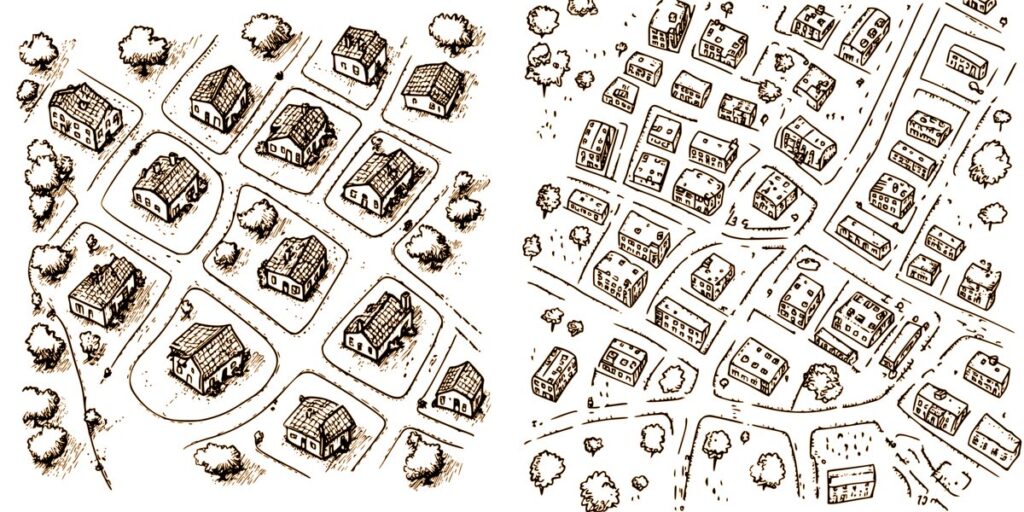
Nestled just southeast of downtown Baton Rouge, the Jefferson neighborhood holds a unique place in the heart of the city’s history. With grand oak-lined streets, a tapestry of historic homes, and a vibrant community spirit, Jefferson is more than just a place to live—it’s a living testament to Baton Rouge’s past, present, and future.
Origins: From Rural Crossroads to Bustling Neighborhood
The roots of Jefferson stretch back to the earliest days of East Baton Rouge Parish. In the late 1800s, what we now call Jefferson was primarily rural land, dotted with small farms and crossed by the winding Bayou Duplantier. The area’s main artery, Jefferson Highway (now also known as LA-73), was once part of a major early automobile route connecting New Orleans to Winnipeg, Canada. This “auto trail,” designated in the 1910s, not only gave Jefferson its name but also its lifeblood—uniting far-flung communities and laying the groundwork for residential development.
Jefferson Highway itself was named in honor of President Thomas Jefferson, reflecting the era’s fascination with grand American projects and manifest destiny. As the route was paved and improved, it attracted small businesses, churches, and clusters of houses, slowly transforming the area from farmland to a true neighborhood by the 1920s and 1930s.
Key Historical Milestones
Throughout the twentieth century, Jefferson saw an evolution shaped by waves of development, social change, and the ever-growing city around it.
- 1920s–1940s: Early Suburban Growth
- The establishment of subdivisions like Bernard Terrace and Goodwood kicked off a building boom, with charming bungalows and cottages popping up under the thick canopy of live oaks.
- Institutions such as Jefferson United Methodist Church (founded in 1946) rooted the neighborhood as a faith and family center.
- 1950s–1970s: Golden Era and Expansion
- The postwar years brought a surge of new residents drawn by Baton Rouge’s growing petrochemical industry and LSU’s expansion.
- Key civic spaces like Independence Park, a community hub on Independence Boulevard, were established, along with the main branch of the East Baton Rouge Parish Library.
- 1980s–Present: Preservation and Renewal
- As Baton Rouge expanded further, Jefferson found itself at the heart of the city—bridging old and new.
- Homeowners and local associations rallied to preserve the neighborhood’s historic houses, unique architecture, and tree-lined streets, balancing gentle progress with a deep respect for history.
Notable Landmarks and Beloved Institutions
Jefferson’s legacy is etched into its landscape, with many buildings and sites telling the story of the city’s evolution.
- Jefferson Highway
- The “spine” of the neighborhood, with stately homes, eclectic local businesses, and the gentle curve of Bayou Duplantier on the eastern edge.
- Independence Park and the Botanic Gardens
- This sprawling green space along Independence Boulevard serves as a gathering place for neighbors of all ages.
- The Baton Rouge Botanic Gardens, housed within the park, boasts a stunning rose garden, children’s garden, and shaded walking paths under ancient oaks.
- East Baton Rouge Parish Library (Main Library)
- Opened in 2014, this modern marvel on Goodwood Boulevard stands as a symbol of lifelong learning and community engagement.
- The surrounding Independence Park complex is home to festivals, farmers markets, art exhibitions, and outdoor concerts year-round.
- Goodwood and Bernard Terrace
- Among the oldest planned subdivisions in Baton Rouge, these streets—alive with dogwoods, crepe myrtles, and magnolia trees—showcase classic southern architecture, from Craftsman bungalows to mid-century ranches.
- Jefferson Terrace Park
- Nestled between Jefferson Highway and Airline Highway, this locally loved spot offers walking trails, tennis courts, and open lawns perfect for family picnics and community events.
Evolution Through the Decades
Ask any longtime resident and they’ll tell you: Jefferson is a neighborhood that both adapts and endures.
- In the 1950s and 1960s, Jefferson was the quintessential postwar suburb—bike-riding kids, little league games at the park, and corner grocery stores where everyone knew your name.
- During the 1970s and 1980s, the neighborhood faced growing pains as Baton Rouge’s population boomed and shopping centers like Jefferson Plaza emerged.
- In recent decades, Jefferson has seen a renaissance of sorts. Young families are drawn to its walkable streets and top-rated schools, while active neighborhood associations ensure that historic homes are preserved and new development fits Jefferson’s classic character.
The Community Spirit That Endures
What truly sets Jefferson apart, however, is its spirit of community. Block parties, garden club meetings, holiday parades—these traditions foster a sense of belonging that is rare in a bustling city.
Local schools—like Westdale Heights Academic Magnet and St. Luke’s Episcopal School—serve as anchors for generations of learners. Churches, civic organizations, and small businesses anchor daily life, while old friends linger at coffee shops along Jefferson Highway and newcomers are always greeted with a smile.
Why Jefferson Remains Special
Even as Baton Rouge grows and changes, Jefferson’s heritage continues to shine through. Residents take pride in their neighborhood’s role in the city’s story—whether caring for an 80-year-old oak tree or volunteering at the library, the people of Jefferson know they’re stewards of something precious.
Today, strolling down Glenmore Avenue or walking along the shaded path in Independence Park, one can feel the neighborhood’s enduring embrace—a harmonious blend of old and new, heritage and hope.
Whether you’re sipping sweet tea on a porch built in 1935 or watching your children play under the broad branches of Jefferson Terrace Park, there’s no doubt: Jefferson is, and always will be, one of Baton Rouge’s most cherished neighborhoods.